Composting for Beginners: Simple Ways to Turn Kitchen Waste into Garden Gold
In a world that often feels rushed and disposable, composting is a quiet act of balance: a way to return what we take and nourish what we grow. You don’t need a big garden, fancy equipment, or years of experience. Composting can start right where you are: in your kitchen, on your balcony, or in a small backyard.
11/10/20252 min read
Why Composting Matters
Composting is nature’s original recycling system. Every peel, leaf, and coffee ground you add to your compost becomes part of a closed-loop cycle: a return to the earth that feeds the next season’s growth.
When organic waste goes into the trash, it often ends up in landfills where it decomposes without oxygen, releasing methane (a potent greenhouse gas). Composting at home changes that: it turns what you might throw away into something that gives back.
Beyond the environmental benefits, composting also nurtures mindfulness. Watching your food waste turn into soil reminds you that nothing in nature is wasted: everything transforms. It’s a small daily act of hope.
How to Start Composting at Home
You don’t need a large space or expensive tools to begin: just consistency and curiosity.
1. Choose your compost setup.
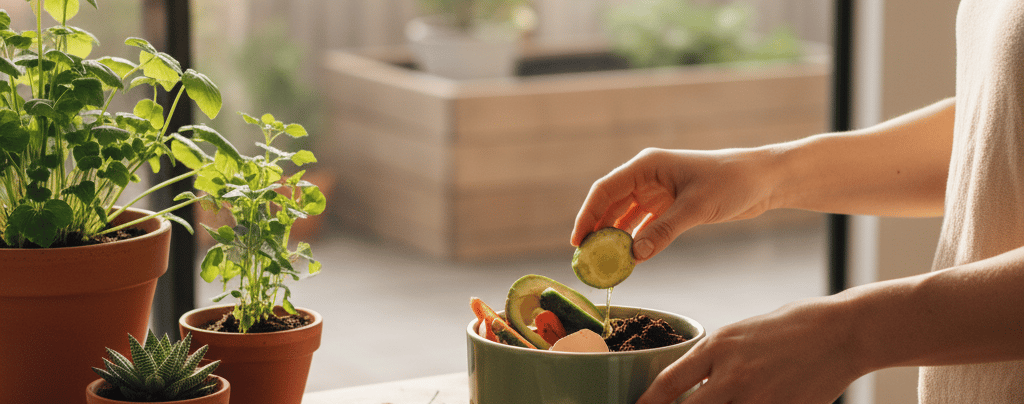
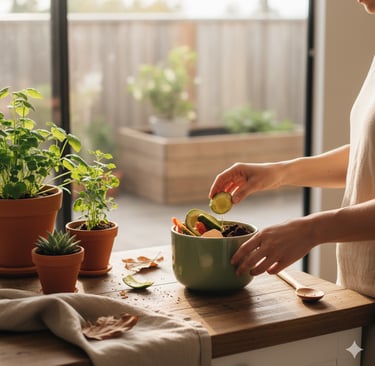
If you have a garden, a simple open pile or compost bin works beautifully. For small spaces or apartments, try a sealed indoor composter, Bokashi bucket, or electric composter — they’re clean, odor-free, and easy to manage.
2. Learn your greens and browns.
Compost needs a balance of “green” (nitrogen-rich) and “brown” (carbon-rich) materials.
🌿 Greens: fruit and vegetable scraps, coffee grounds, tea leaves.
🍂 Browns: dry leaves, cardboard, paper towels, sawdust.
Alternate layers of green and brown, and keep your compost slightly damp: like a wrung-out sponge.
3.Air and mix.
Turn your compost every week or two to let oxygen circulate. This speeds up decomposition and prevents odors.
4.Patience.
Nature doesn’t rush, and neither should we. Within a few months, your mix will turn dark, crumbly, and earthy: ready to feed your plants.
What You Can (and Can’t) Compost
Most plant-based kitchen waste is fair game, but a few items don’t belong in your bin.
✅ Yes: fruit peels, coffee grounds, tea bags, vegetable trimmings, paper, eggshells, leaves.
❌ No: meat, dairy, oil, citrus in large amounts, and pet waste.
A good rule of thumb: if it’s plant-based and chemical-free, it’s probably compost-friendly.
Common Mistakes to Avoid
Even seasoned gardeners sometimes get compost wrong. Here are the most common missteps:
Too wet: if your pile smells sour, add more dry leaves or cardboard.
Too dry: if nothing breaks down, add a few green scraps or water.
Not enough air: turn your compost often — air is what keeps it alive.
Remember, composting isn’t chemistry: it’s a conversation with nature. When something seems off, adjust gently and observe.
Indoor Composting: Greening Small Spaces
Don’t have outdoor space? You can still compost! Indoor composters, like Bokashi bins or smart composters, make the process quick and nearly odorless. Keep your bin in a pantry, under the sink, or on a balcony.
The beauty of indoor composting is that it fits easily into daily life. When you brew coffee, chop vegetables, or trim herbs, you’re already gathering tomorrow’s soil.
The Beauty of Closing the Loop
Composting is more than a gardening technique: it’s a mindset. It teaches patience, care, and trust in slow processes. Watching waste turn into nourishment reminds us that every ending is also a beginning.
When you add that first scoop of compost to your plants, you’re not just feeding them: you’re participating in the quiet miracle of renewal.
Feeling inspired?
Start your composting journey today!
Download our Composting Starter Checklist and explore more ideas for sustainable living.